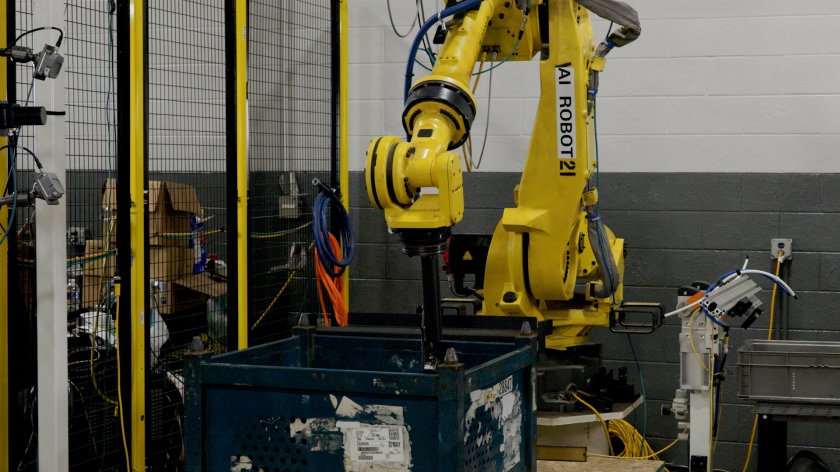
In modern automation, speed and precision matter—but they’re no longer enough on their own. Today’s robots are expected to work safely alongside people, handle delicate materials, adapt to variability, and perform complex tasks that once required human judgment.
What makes this possible?
The sense of touch.
Why Touch Matters in Robotics
Traditional robots rely heavily on vision systems and pre-programmed motion paths. While effective in structured environments, this approach can fall short when tasks involve physical contact, delicate materials, or unexpected variation.
Force/torque sensors change that dynamic. By measuring real-time forces and moments during interaction, robots gain physical awareness—allowing them to feel contact, resistance, pressure, and torque.
The result? Automation that reacts intelligently instead of rigidly.
What Is a Force/Torque Sensor?
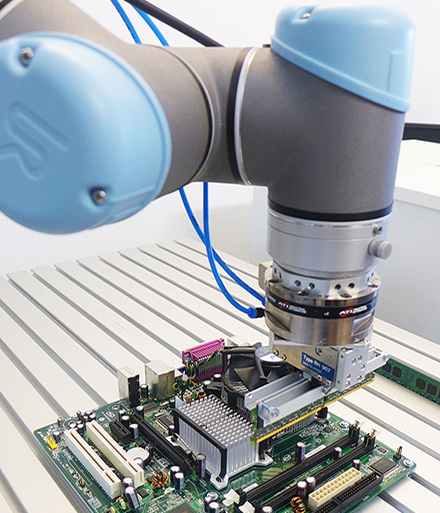
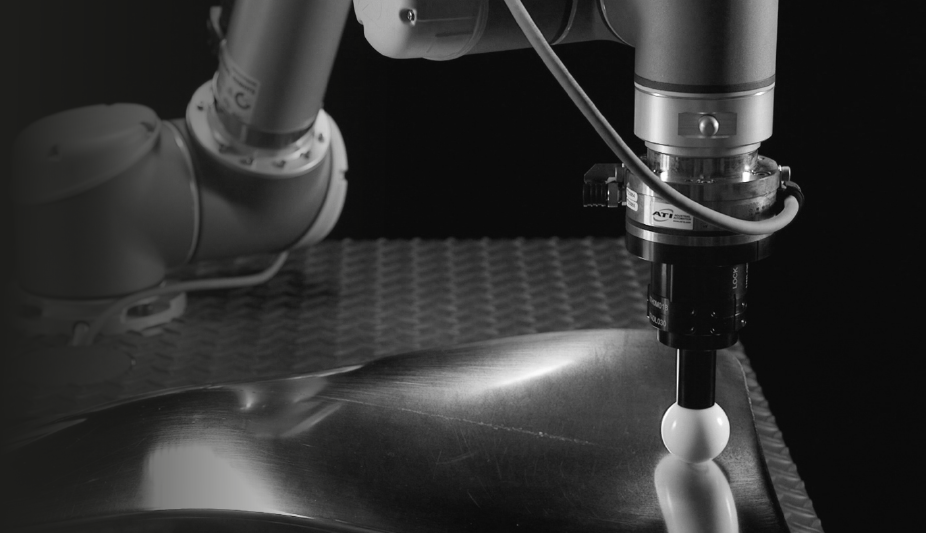
A force/torque (F/T) sensor measures forces and rotational moments applied to a robot or tool—typically across six axes (X, Y, Z forces plus roll, pitch, and yaw torques). Installed at the robot’s wrist or integrated into tooling, these sensors provide immediate feedback to the robot controller.
Instead of blindly following a path, the robot continually adjusts its motion based on how much force it’s actually applying—much like a human hand would.
Key Benefits of Force‑Controlled Automation
Improved Precision and Quality
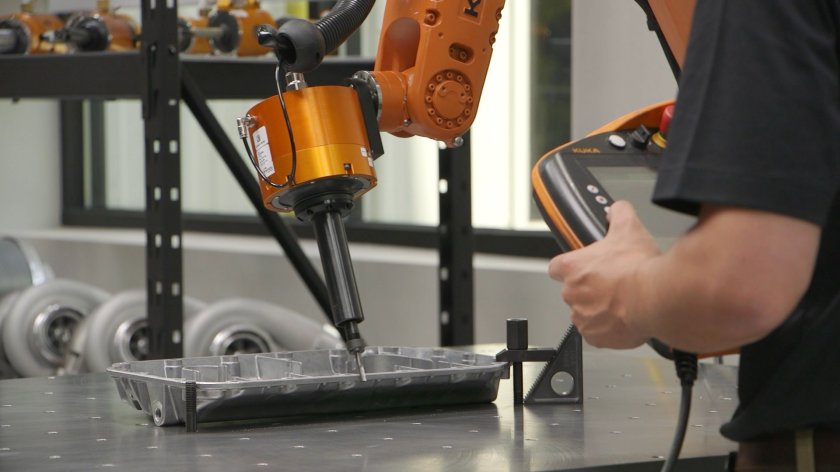
Force feedback allows robots to apply consistent, controlled pressure, improving accuracy in applications such as assembly, fastening, polishing, and press‑fitting. Robots can compensate for part variation, alignment errors, and surface irregularities—delivering repeatable results.
Enhanced Safety
Force/torque sensors help robots detect unexpected contact and respond immediately by stopping or slowing motion. This capability is essential for collaborative robots (cobots), helping protect people, equipment, and products while supporting safer human‑robot interaction.
Greater Flexibility and Adaptability
In real‑world environments, no two parts are exactly the same. Force‑aware robots can adjust grip strength, locate parts through gentle probing, and adapt to changing conditions—making automation possible in environments where traditional robots struggle.
Enabling Smarter, AI‑Driven Robots
Force data is a valuable input for intelligent automation. By monitoring interaction forces, robots can detect process drift, identify tool wear, and improve performance over time. This makes force sensing a key enabler for advanced robotics and learning‑based systems.
The Future of Automation Is Tactile
Force/torque sensing is transforming robots from rigid machines into responsive, intelligent systems capable of interacting safely and precisely with the physical world. As automation continues to evolve, tactile awareness will be essential for achieving higher performance, flexibility, and autonomy.
Want to Learn More?
Download the whitepaper to explore how force/torque sensors enhance automation performance—and what it takes to integrate them successfully.
Download the Whitepaper
Discover how force sensing improves precision, safety, and adaptability in robotics.